2026-10-16 ·
Step by Step Drying Process After Minor Interior Leaks
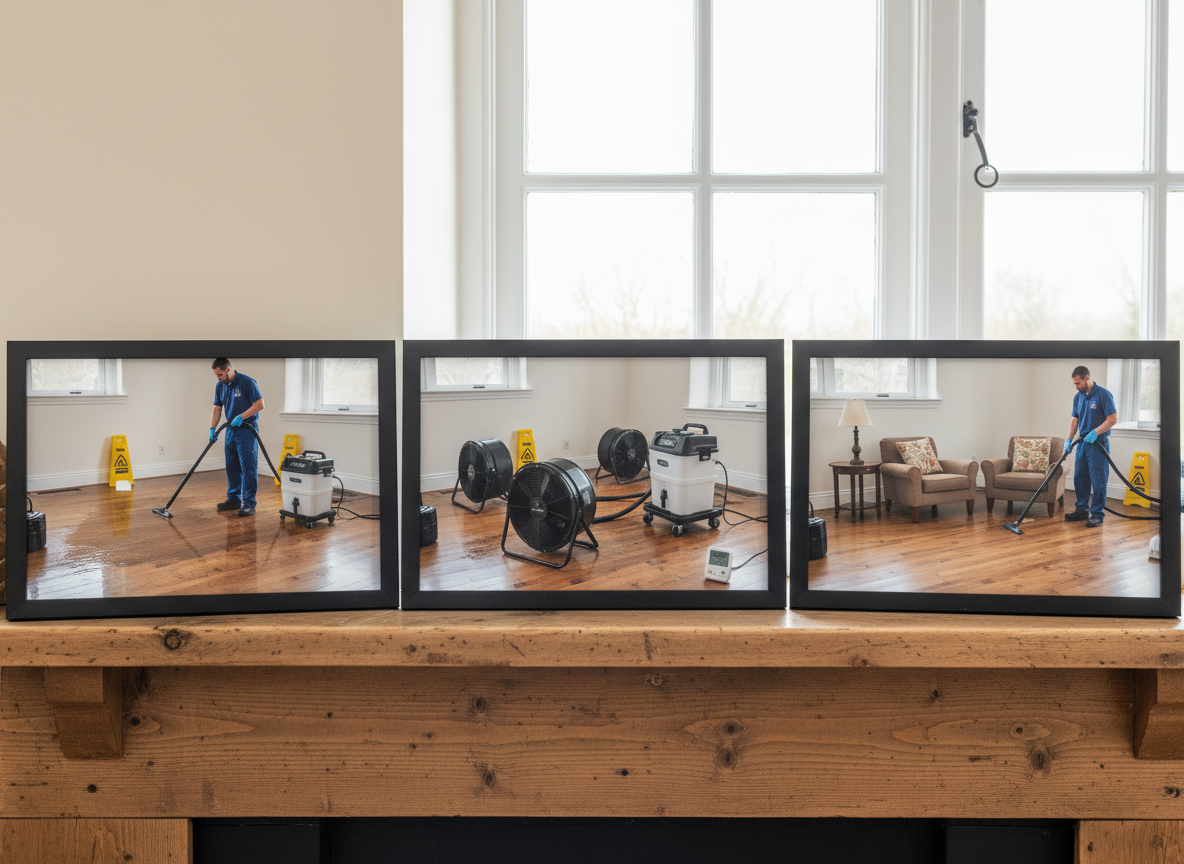
Minor interior leaks in Burton homes can be fully dried in 48 to 72 hours when extraction and airflow begin within the first hour. Older Vashon Island houses with single-wall construction and limited crawlspace access often trap moisture behind baseboards and under vinyl flooring, so the process starts with locating every wet layer before any equipment runs.
Initial Assessment and Containment
Walk the affected rooms and mark every damp zone with a moisture meter before moving furniture. In Burton properties built before 1970, plaster walls absorb water differently than drywall, so probe both the surface and the cavity behind outlets. Close off the room with plastic sheeting taped at the ceiling and floor to keep moist air from migrating into unaffected areas such as hallways or adjacent bedrooms. Note the leak source, whether a roof valley or a bathroom supply line, then shut off water if the flow is still active. This containment step prevents secondary damage that commonly appears in the tight floor plans typical of Vashon Island cottages.
Water Extraction Techniques
Remove standing water first with a portable extractor that pulls 10 to 15 gallons per minute from carpet pads and hardwood seams. For minor leaks under 5 gallons, a shop-vac with a squeegee attachment often suffices on vinyl or tile, but always lift the material to check the subfloor. In Burton homes with pier-and-beam foundations, tilt extractors toward the lowest joist bays where water pools. Work in overlapping passes and change collection tanks before they reach three-quarters full to maintain suction. Once visible water is gone, place absorbent pads along baseboards for 20 minutes to pull residual moisture from the wall cavity.
Dehumidification and Air Circulation
Set a commercial dehumidifier rated for at least 70 pints per day in the center of the room and aim it toward the wettest wall. Pair it with two air movers per 100 square feet, angled at 45 degrees across the floor and another 20 inches up the wall. On Vashon Island, where relative humidity often sits above 75 percent in winter, run the dehumidifier continuously and empty the condensate tank every four hours. Rotate the air movers every six hours so every surface receives direct airflow. Avoid household box fans; they recirculate moist air and can spread spores into unaffected rooms.
Monitoring Moisture Levels
Check moisture readings every 12 hours with both a pin meter and a non-invasive scanner. Drywall should reach 12 to 15 percent moisture content; wood subfloors should drop below 12 percent before coverings are replaced. In older Burton homes, hidden pockets behind built-in cabinets or under stair treads often stay wet longest, so remove base shoe molding to expose those edges. Record readings on a simple chart so you can see the daily drop. If any zone stalls above 20 percent after 48 hours, open the wall cavity or consult a water damage mitigation specialist for targeted drying.
Final Inspection and Prevention
Once all readings stabilize, run a final walkthrough with the homeowner to confirm no soft spots remain in flooring or walls. Replace any insulation that was removed and reinstall trim with stainless screws to resist future corrosion. For properties near Burton’s shoreline, improve exterior grading so rainwater flows away from the foundation, reducing repeat leaks. Homeowners can review drainage challenges on Vashon Island properties for long-term fixes and spotting hidden moisture in older Burton properties for early warning signs before the next storm.