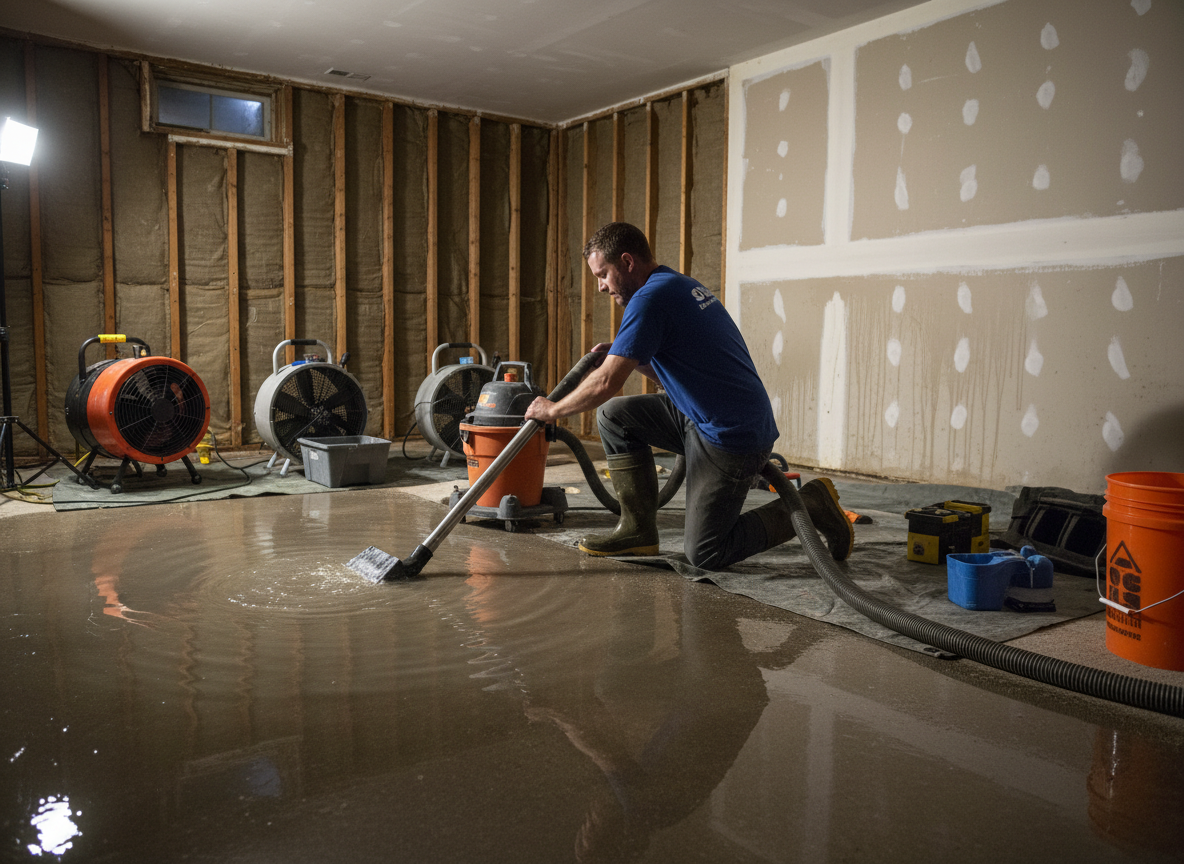
Water damage mitigation focuses on halting active intrusion and removing standing water before mold or structural rot sets in. In Burton homes built on Vashon Island before the 1980s, wood-framed floors over crawlspaces absorb moisture quickly during prolonged winter rains, so extraction must reach subfloor cavities the same day. Technicians use moisture meters to map saturation beyond visible puddles because cedar siding and older plaster walls retain water along seams that later cause hidden decay.
Once water is removed, rapid drying with air movers and dehumidifiers targets the island's high humidity levels that slow evaporation even after rain stops. King County building codes require documentation of moisture levels below 15 percent before any reconstruction begins, and ferry schedules can delay material deliveries, so mitigation crews often stage temporary barriers to protect unaffected rooms. Edge cases include groundwater seepage along the island's sloped terrain where clay soils hold water against foundations for weeks.
Seasonal Considerations
Winter storms push water under door thresholds in Burton's older cottages while summer irrigation leaks around raised garden beds create slow saturation in crawlspaces that homeowners overlook until odors appear. Mitigation crews check both the structure and any adjacent outbuildings because water travels along shared utility trenches common on Vashon properties.
Hidden Moisture Risks
Plumbing chases in multi-story homes near the highway often route through exterior walls exposed to salt air, accelerating corrosion in older galvanized lines. Mitigation includes isolating these runs early to avoid repeated failures after the initial event is addressed.
Technician insight
In Burton the thing that catches most people out with water damage mitigation is how cedar siding and crawlspace dirt floors on older Vashon homes keep pulling moisture from the ground long after the rain ends, especially along the highway corridor where runoff pools against foundations.
Crawlspace Saturation After Winter Storm
A Burton homeowner called after heavy rain pushed water under the foundation skirt of a 1970s house near 23812 Vashon Hwy SW. We found six inches of standing water over the dirt floor with moisture wicking into floor joists. Extraction and targeted drying brought levels down within four days, allowing the owner to schedule repairs without mold growth.
How it works
- 1
Emergency Assessment
Arrive on site, identify the water source, and document affected materials in Burton homes.
- 2
Water Extraction
Remove standing water and saturated debris using pumps and vacuums suited to island terrain.
- 3
Drying and Monitoring
Place equipment and track moisture levels daily until readings meet King County standards.
- 4
Containment and Protection
Install barriers to prevent cross-contamination and secure the property against further weather exposure.
- 5
Handover Documentation
Provide moisture logs and photos for insurance and any required county permits.
Pricing
Cost depends on water category, square footage affected, and access challenges typical of Vashon Island properties.