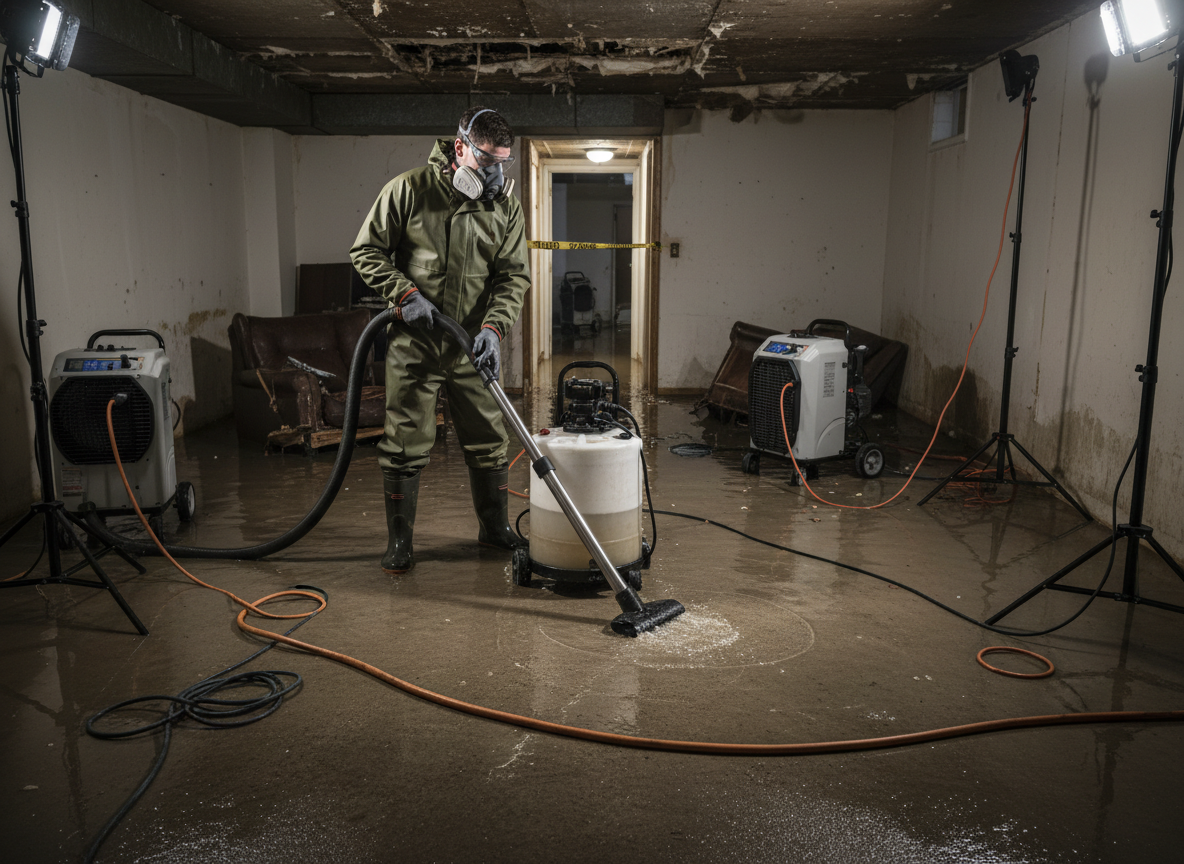
Burton sits on Vashon Island where heavy winter rains often exceed the capacity of older drainage systems and septic fields. Floodwater enters through crawl spaces and daylight basements common in homes built before modern code updates. We begin every job by mapping moisture migration through the island’s clay-loam soils that trap water against foundations for days after the rain stops. This local pattern means hidden saturation behind baseboards and under subfloors is the norm rather than the exception.
Once standing water is removed we deploy commercial air movers and dehumidifiers sized for the tight, poorly ventilated spaces typical of Burton’s older housing stock. We monitor moisture content in joists and insulation daily because the marine climate keeps relative humidity high even after visible water disappears. Skipping these readings frequently leads to recurring musty odors months later when spring fog rolls in.
We coordinate with King County permitting requirements when structural elements must be opened, and we document every step for insurance adjusters who serve the island. Homeowners on Vashon often discover that their policies treat groundwater differently from surface flooding, so we photograph soil conditions and drainage paths at the first visit to support accurate claims.
Technician insight
In Burton the thing that catches most people out with Flood restoration services is how the island’s heavy clay soils keep water pressed against older foundation walls long after the rain ends, so drying times stretch and hidden mold appears weeks later if you only treat the visible floor.
Crawl-Space Flooding After December Storm
A Burton home near the highway took several inches of rainwater through a clogged perimeter drain. We found saturated insulation and wet sill plates extending twelve feet along one wall. Extraction and targeted drying prevented rot in the original floor joists and the homeowner returned to a dry, odor-free space within five days.
How it works
- 1
On-Site Assessment
We arrive within hours, locate all water entry points, and test moisture levels in walls, floors, and soil around the foundation.
- 2
Water Extraction
High-volume pumps and wands remove standing water from basements and crawl spaces while protecting intact finishes where possible.
- 3
Drying and Monitoring
Equipment is placed for targeted airflow; daily moisture readings continue until materials return to pre-loss levels.
- 4
Sanitizing and Restoration
Affected surfaces are cleaned, antimicrobial treatments applied, and any removed materials are replaced to match existing construction.
Pricing
Upfront quotes follow a site visit; final cost reflects water volume, affected square footage, and any required demolition.