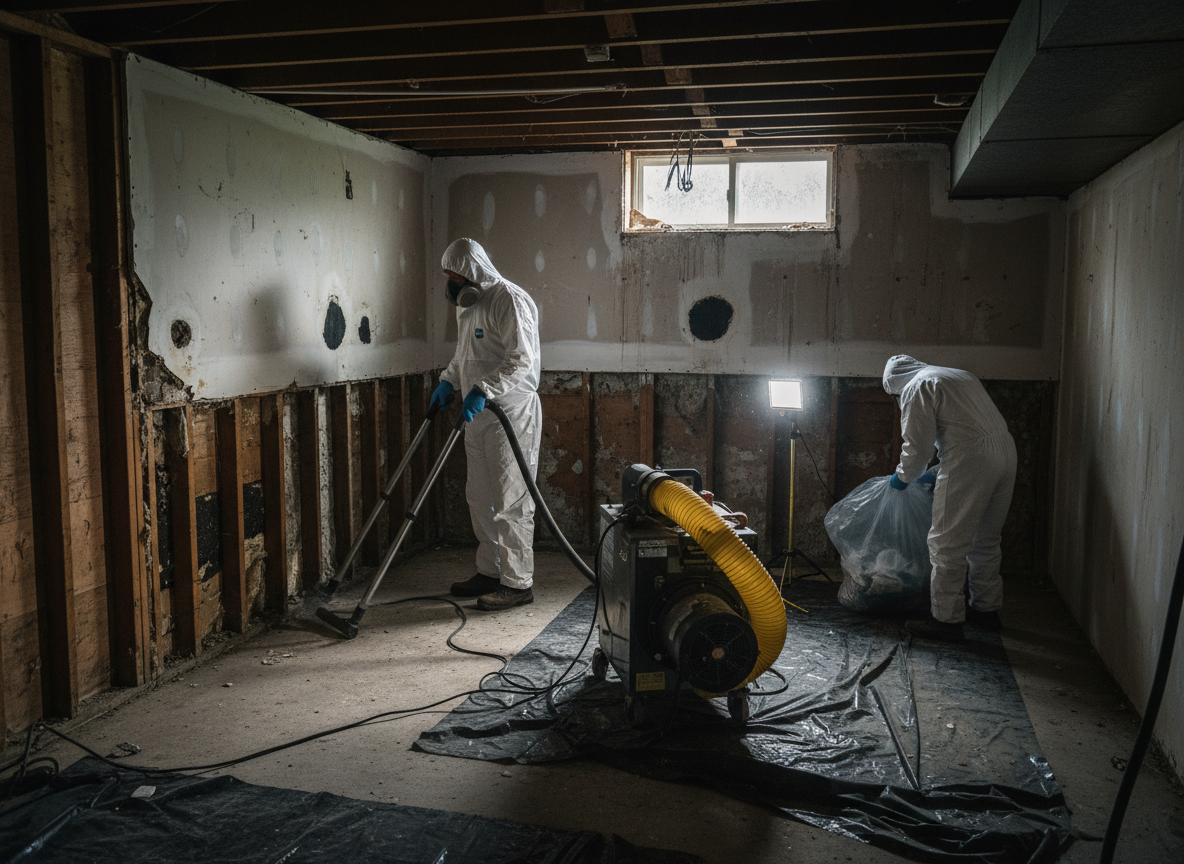
Water intrusion in Burton homes often reaches crawl spaces and wall cavities in houses built on Vashon Island before the 1990s, where poor ventilation and constant moisture from Puget Sound create ideal conditions for mold colonies within 48 hours. Removing affected drywall, insulation, and subflooring requires negative air machines and HEPA filtration to prevent spores from spreading into living areas, especially when homes sit on sloped terrain that funnels rainwater toward foundations.
King County building codes require proper disposal of contaminated materials and documentation of moisture levels below 15 percent before reconstruction can begin. Technicians must check behind cabinets and under vinyl flooring common in mid-century Vashon residences, because surface cleaning alone leaves roots that regrow when humidity spikes during the wet season. Failure to address these hidden pockets leads to recurring issues that affect indoor air quality long after the initial leak is fixed.
Portable dehumidifiers sized for the square footage combined with air movers directed at joists and sill plates speed drying in the damp island climate. Homeowners in Burton should avoid disturbing visible growth themselves, as disturbing it without containment can aerosolize particles throughout the structure and complicate later remediation efforts.
Technician insight
In Burton, the thing that catches most people out with mold remediation after water damage is how quickly growth spreads through the crawl spaces of homes built on Vashon Island before modern vapor barriers, especially when roof leaks go unnoticed during the long rainy season.
Crawl Space Growth After Roof Leak
A Burton homeowner noticed musty odors following heavy rain that pooled near the foundation. Inspection revealed black mold on joists and insulation in the unvented crawl space of a 1970s house. We contained the area, removed affected materials, dried the soil and framing, and confirmed safe moisture levels before the owner could begin repairs.
How it works
- 1
Initial Assessment
Inspect all affected rooms, crawl spaces, and attics using moisture meters and thermal imaging to map the full extent of water migration.
- 2
Containment Setup
Erect plastic barriers and run HEPA air scrubbers to isolate the work zone and protect unaffected areas of the home.
- 3
Material Removal
Cut out and bag moldy drywall, carpet, and insulation for proper disposal while preserving structural elements where possible.
- 4
Drying and Treatment
Apply antimicrobial solutions to remaining surfaces and run industrial drying equipment until moisture readings reach safe levels.
- 5
Final Clearance
Retest air quality and surfaces, then provide written documentation before any rebuilding begins.
Pricing
Pricing varies by the square footage affected and whether mold has reached subflooring or insulation in older Burton homes.