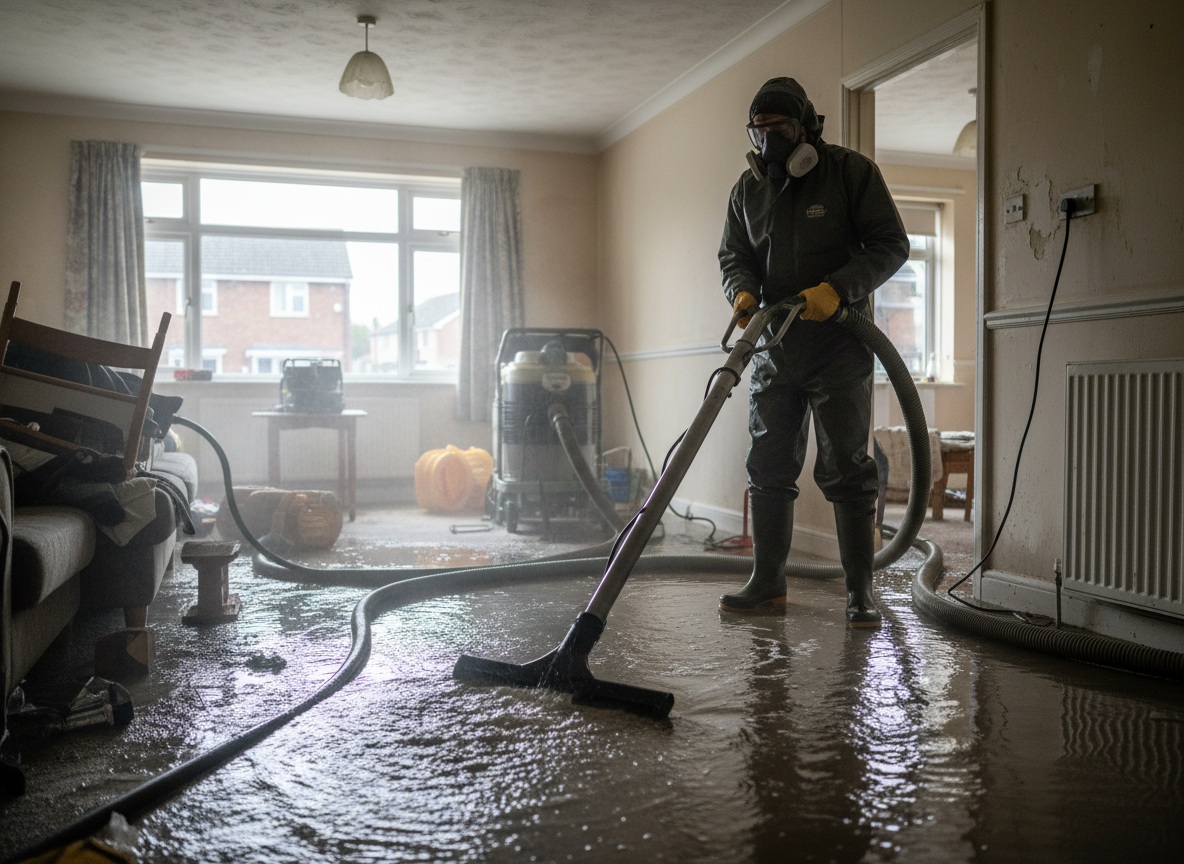
Emergency water removal in Burton starts with locating the source and stopping active intrusion before extraction begins. Homes along Vashon Hwy SW and nearby side streets often feature older crawlspaces and pier-and-beam foundations that trap water against the soil, requiring pumps and air movers placed at multiple access points. Technicians map moisture with meters to avoid missing pockets behind walls or under subfloors that can lead to hidden mold growth within days.
Once standing water is removed, dehumidifiers and drying fans are positioned based on the layout of each Burton property. The island's frequent wind-driven rain and limited drainage in low-lying spots near the highway can extend drying times, especially in homes built before modern vapor barriers became standard. Crews monitor humidity levels daily and adjust equipment to prevent secondary damage to hardwood floors or insulation common in the area.
Final clearance includes checking adjacent rooms and attics for migrated moisture, then documenting conditions for insurance. Work is performed around the clock from the Burton location so response stays under an hour even at night or on weekends when most calls arrive after storms move through the region.
Technician insight
In Burton, the thing that catches most people out with Emergency water removal is how the clay soil along Vashon Hwy SW holds water against older crawlspace walls, so even after we pull the standing water the ground stays damp for days and keeps feeding moisture back into the joists if we don't keep fans running.
Washing machine line failure on Vashon Hwy
A supply line burst behind a laundry wall in a Burton home and flooded the utility room plus the adjacent crawlspace. We shut the main valve, pumped out the water, then discovered moisture had wicked into the subfloor. Extraction and targeted drying prevented rot from reaching the kitchen floor above.
How it works
- 1
Source Identification
Locate and stop the active water source using shutoffs or temporary containment before extraction starts.
- 2
Standing Water Removal
Deploy submersible pumps and wet vacuums to extract visible water from floors, basements, and crawlspaces.
- 3
Moisture Mapping
Use meters and thermal imaging to find hidden moisture in walls, subfloors, and insulation throughout the structure.
- 4
Drying and Monitoring
Place air movers and dehumidifiers, then return daily to adjust equipment until readings reach safe levels.
Pricing
Upfront quotes provided after inspection; final cost depends on water volume, affected materials, and drying duration.