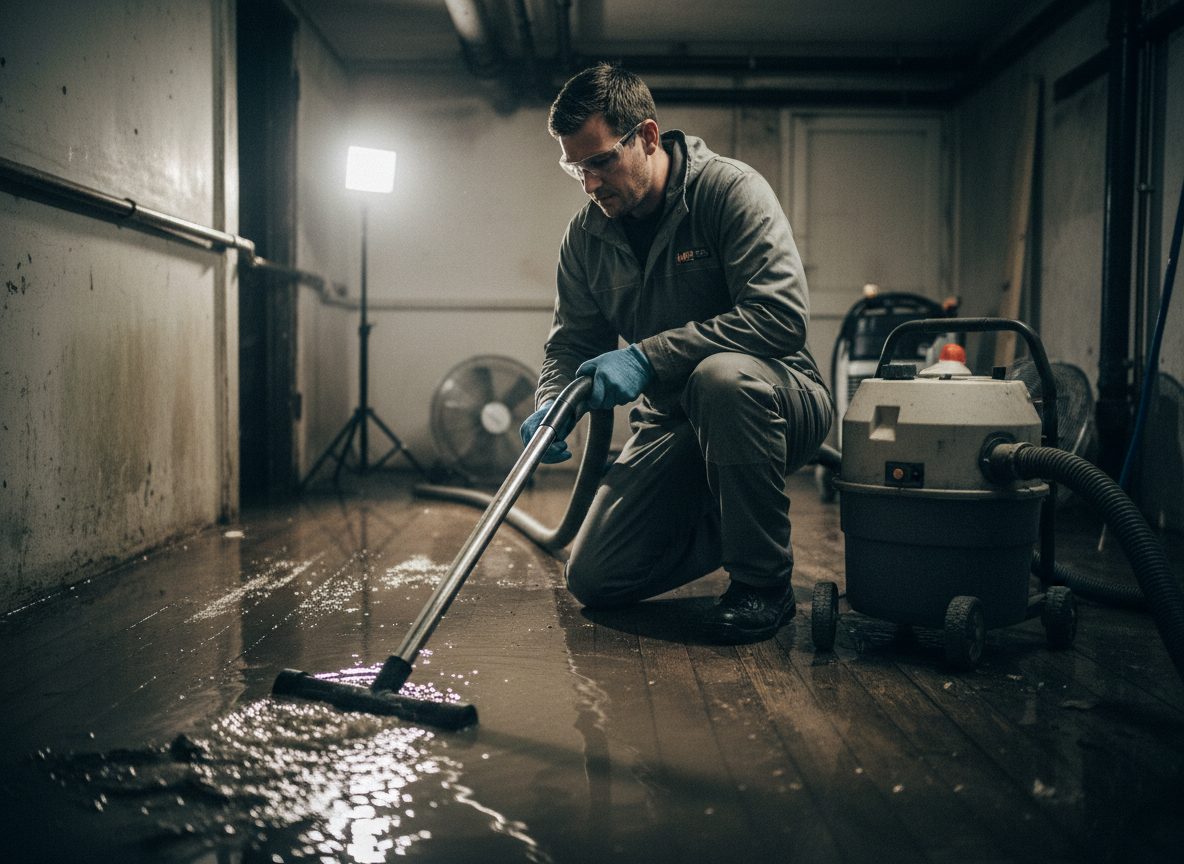
Water extraction in Burton homes starts with identifying how water entered and where it pooled, especially in crawlspaces common to houses built before the 1980s along Vashon Highway. Technicians use truck-mounted pumps rated for hundreds of gallons per minute followed by submersible units to reach low spots that standard equipment misses. On Vashon Island the ferry schedule and narrow roads mean crews stage equipment at the 23812 Vashon Hwy SW shop so response stays under an hour even at night.
After bulk removal, moisture meters map hidden saturation in subfloors and wall cavities before any drying begins. Older Burton properties often have plaster walls and balloon framing that trap water behind baseboards, so extraction includes removing trim and drilling weep holes when needed. Skipping this step lets moisture migrate into insulation and create conditions for mold within 48 hours during the damp winters typical of King County.
Final extraction checks include pulling carpet pads and inspecting under appliances that sit directly on slab foundations common in mid-century Burton cottages. Crews document every step with photos and meter readings so homeowners see exactly what was removed and what remains to be dried. This record also helps when insurance adjusters visit properties near Burton Park or the north end ferry terminal.
Technician insight
In Burton, the thing that catches most people out with water extraction is the clay-heavy soil around older homes off Vashon Hwy that holds water against foundations long after the rain stops, so extraction has to keep running until the ground itself starts to dry or moisture just wicks back inside.
Crawlspace Flood Near Burton Park
Heavy overnight rain sent water under a 1960s home on the north end of Burton. Pumps removed several inches of standing water from the crawlspace but meters still read high on joists. We pulled wet insulation, drilled weep holes in rim joists, and ran extraction another four hours until readings dropped below 15 percent. The owner avoided mold growth and kept the original subfloor intact.
How it works
- 1
Site Assessment
Technicians arrive 24/7, locate the water source, and measure depth and spread using moisture meters before any equipment enters the structure.
- 2
Bulk Water Removal
Truck-mounted and submersible pumps extract standing water from floors, crawlspaces, and basements while protecting electrical systems.
- 3
Hidden Moisture Extraction
Carpet pads are pulled, baseboards removed, and weep holes drilled where plaster or framing holds water that pumps cannot reach.
- 4
Documentation and Hand-off
Photos, meter logs, and a written summary are provided so the homeowner can coordinate drying and any needed repairs.
Pricing
Cost depends on water volume, number of affected rooms, and access to crawlspaces or basements; upfront quotes are given on site before work starts.