2026-10-16 ·
Spotting Hidden Moisture in Older Burton Properties
Older Burton properties on Vashon Island often conceal moisture in crawl spaces and wall cavities due to decades of heavy rainfall and wood-framed construction typical of homes built before 1970. Homeowners can spot these problems by checking for musty odors, warped flooring, or discoloration on ceilings, then using moisture meters to confirm readings above 15 percent in suspect areas. Addressing leaks promptly through targeted drying keeps repairs under $2,000 in most cases when caught before mold spreads.
Inspecting Crawl Spaces in Burton Homes
Crawl spaces under older Burton homes frequently trap moisture from Vashon Island's 40-plus inches of annual rain that seeps through foundation cracks or poor drainage around the 23812 Vashon Hwy SW vicinity. Walk the perimeter first and look for standing water, efflorescence on concrete, or sagging insulation that indicates prolonged dampness. Use a moisture meter on joists and subfloors, noting any readings over 20 percent that signal hidden saturation. Older homes here often lack vapor barriers, so condensation forms quickly once temperatures drop in winter. Document soft spots with photos and mark locations for follow-up. These steps reveal issues that surface inspections miss and tie directly into water leak restoration work when pipes or grading need attention.
Checking Attics and Rooflines for Hidden Dampness
Attics in Burton's pre-1980 homes collect moisture from roof leaks around chimneys or vents that the island's frequent storms worsen over time. Climb in during daylight and scan for dark stains on sheathing or compressed fiberglass batts that feel damp to the touch. Probe suspect spots with a pin-type meter and record values above 18 percent, especially near eaves where wind-driven rain enters. Ventilation gaps often clog with debris on Vashon Island properties, trapping humidity that migrates into living spaces below. Note any musty smells or visible mold growth on rafters as early warning signs. These attic checks help homeowners decide when to call for mold remediation after water damage before spores spread through HVAC systems.
Applying Moisture Meters and Thermal Imaging
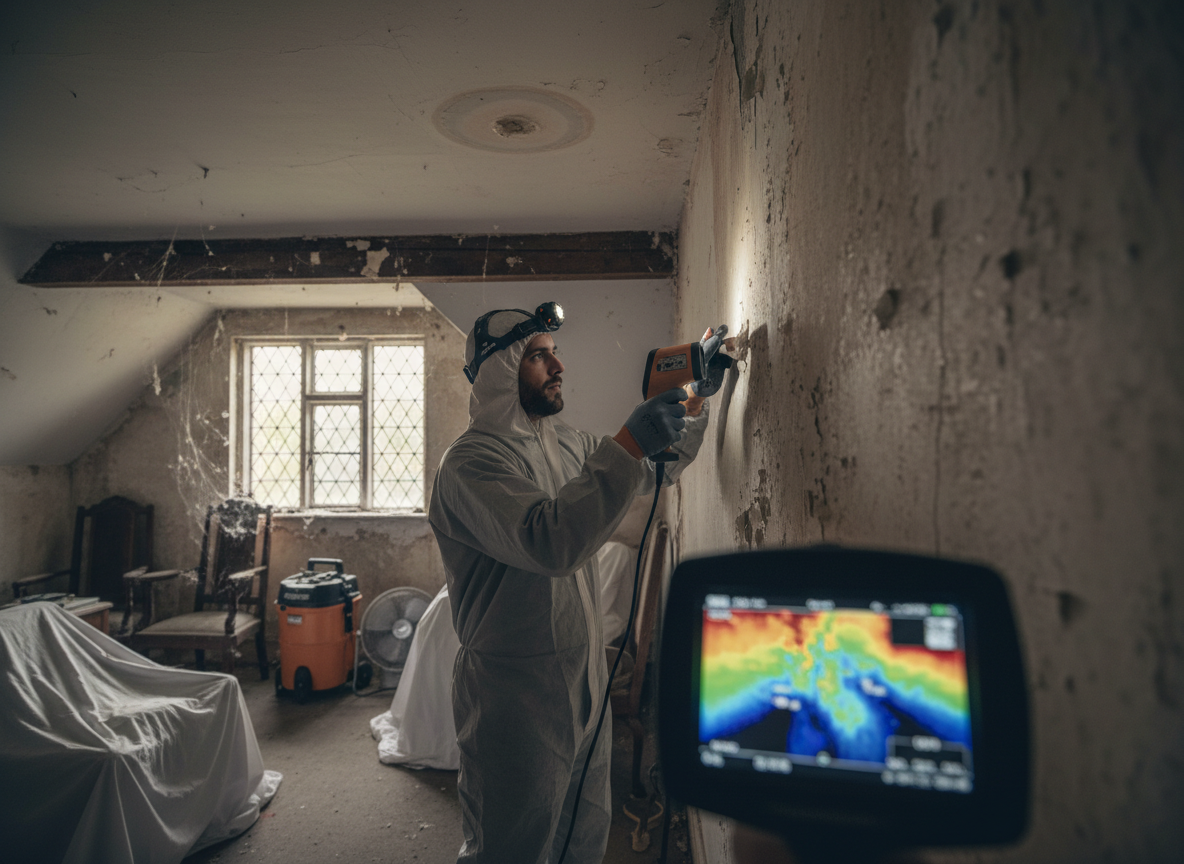
Handheld moisture meters give precise readings in Burton's older plaster and lath walls where visual clues stay hidden behind layers of paint. Slide the pins into baseboards and window sills at multiple heights, averaging results across a room to avoid false positives from surface condensation. Thermal cameras reveal cold spots indicating trapped water behind drywall, particularly useful in homes near Maury Island with similar construction. Take readings at the same time each day to account for humidity swings. Combine meter data with visual notes on floor cupping or door sticking that moisture causes. This methodical approach guides decisions on water damage mitigation before costs rise from widespread drying needs.
Linking Local Drainage Issues to Moisture Risks
Vashon Island's sloped terrain around Burton directs runoff toward foundations of older homes, creating persistent dampness in basements and crawl spaces during fall and winter. Review grading around the property to ensure soil slopes away at least six inches over ten feet. Clogged gutters or downspouts that empty too close to walls compound the problem in these older builds. Homeowners who map these patterns early avoid repeated interior leaks that require emergency water cleanup. For deeper context on island-specific drainage, review drainage challenges on Vashon Island properties. When readings stay elevated after basic fixes, step-by-step drying process after minor interior leaks outlines the next actions to protect the structure.