2026-10-16 ·
How Winter Rains Affect Homes in Burton Washington
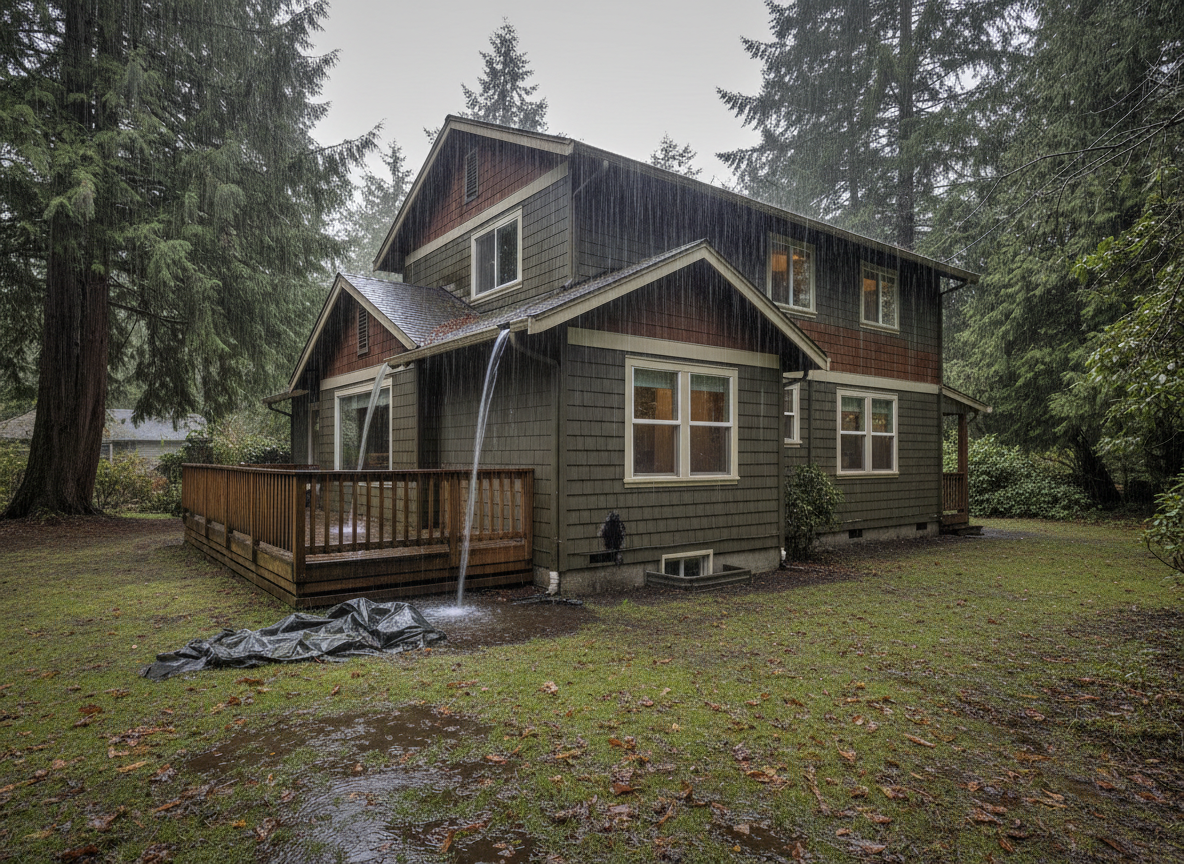
Winter rains in Burton, Washington typically deliver 5 to 8 inches of precipitation per month from November through February, driving water into roof penetrations, siding joints, and foundation perimeters on Vashon Island lots where clay-rich soils hold moisture for weeks.
Roof and Attic Vulnerabilities
Older Burton homes built before 1980 often feature composition shingles rated for 20 to 25 years that absorb water during prolonged storms, allowing seepage at flashing around chimneys and skylights. Attic insulation becomes damp when even small roof leaks go unnoticed for days, leading to ceiling stains and reduced thermal performance. Homeowners on Maury Island and in central Burton report attic mold growth after consecutive rain events exceeding 3 inches in 48 hours because ventilation is frequently blocked by insulation or debris. Checking for soft spots along roof valleys after each major storm helps catch issues before water reaches living spaces.
Crawl Space and Foundation Saturation
Many Burton properties sit on sloped lots with crawl spaces that collect runoff when gutters overflow or downspouts discharge near foundations. Clay subsoils common across the island slow drainage, keeping moisture levels above 60 percent for extended periods and promoting wood rot in floor joists. Drainage challenges on Vashon Island properties outlines how terrain directs water toward older pier-and-beam homes. Standing water in crawl spaces also raises indoor humidity, forcing HVAC systems to run longer to maintain comfort during the wet season.
Basement and Lower-Level Flooding Risks
Basements in Burton homes near the shoreline or in low-lying pockets of the island experience seepage through concrete cracks when winter groundwater rises. Sump pumps can handle 1,000 to 2,000 gallons per hour, yet power outages during storms leave lower levels unprotected. Basement flood cleanup addresses water removal and drying protocols that prevent structural weakening in these spaces. Concrete block foundations common in 1960s and 1970s construction absorb water laterally, creating efflorescence on interior walls that signals ongoing moisture migration.
Long-Term Moisture and Hidden Damage
Repeated winter wetting and drying cycles accelerate deterioration of wood framing and subflooring in Burton homes. Spotting hidden moisture in older Burton properties explains how moisture meters detect elevated readings behind baseboards and in wall cavities weeks after rains end. Water damage mitigation focuses on extraction and dehumidification to bring materials back below 15 percent moisture content before secondary issues develop. Properties along Vashon Highway SW near the business address at 23812 Vashon Hwy SW benefit from prompt response because crews can reach most island neighborhoods within 30 minutes during daylight hours.
Practical Steps After Heavy Rains
Inspect gutters and downspout extensions after each storm to ensure water is directed at least 5 feet from foundations. Clear debris from French drains and yard swales that serve Burton lots with poor natural drainage. Monitor indoor humidity with a simple meter and run exhaust fans in bathrooms and kitchens during extended wet periods. Scheduling annual roof and crawl space checks before November reduces the chance of small leaks becoming large repairs by spring.