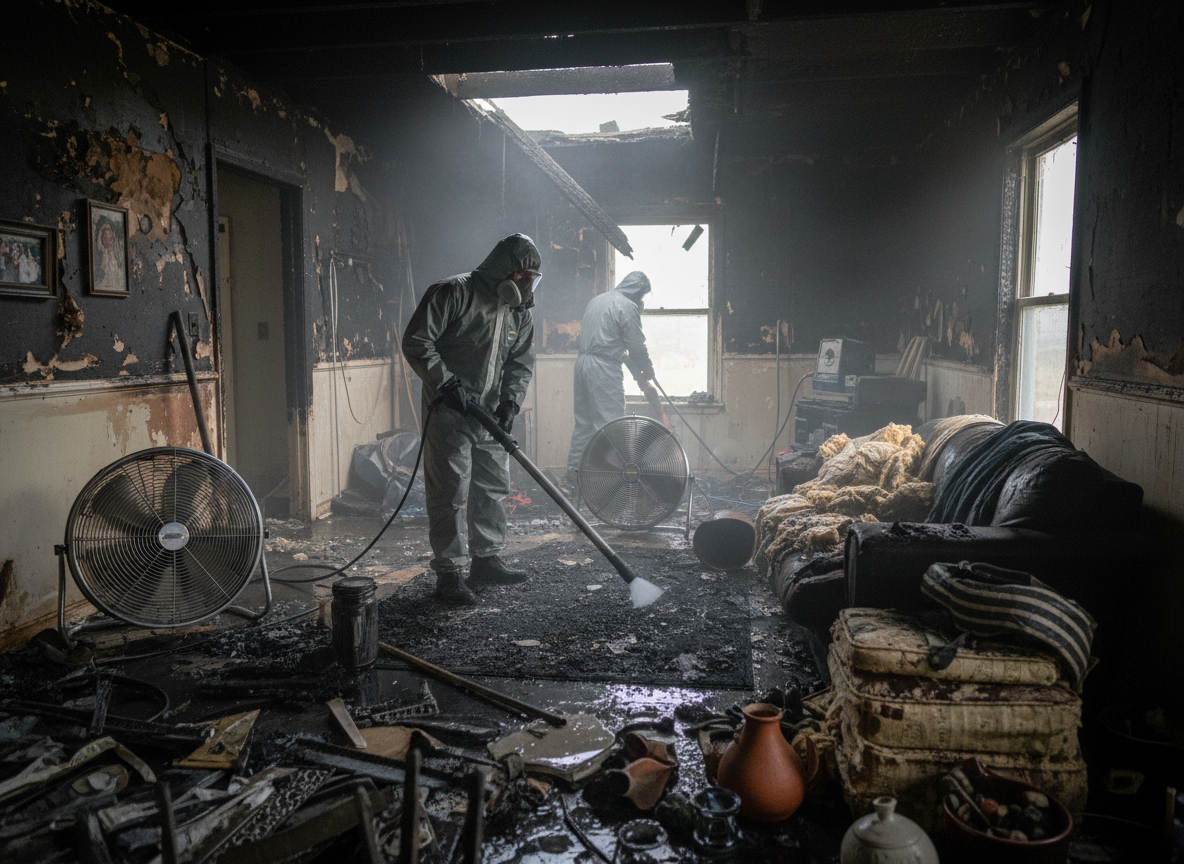
Firefighting water in Burton homes often saturates older wood-framed structures common on Vashon Island. Moisture travels behind lath-and-plaster walls and into subfloors, creating hidden pockets that later support mold. Technicians must remove baseboards, drill inspection holes, and use moisture meters on every level because the island's frequent rain keeps ambient humidity high and slows natural drying.
Soot from burned materials bonds with water, leaving acidic residue that corrodes copper pipes and electrical boxes. In Burton crawl spaces, this mixture pools against pier footings and must be extracted before it migrates into the living space. Negative air machines and HEPA filtration run continuously to keep airborne particles from settling on undamaged surfaces during demolition.
King County code requires documentation of moisture levels before drywall replacement. Crews photograph every reading and log drying times so homeowners can show insurers that hidden water was addressed. On Vashon Island, ferry schedules limit same-day material deliveries, so crews stage equipment on site and work in longer shifts to finish before weather changes.
Edge cases include saturated insulation in cathedral ceilings and water trapped inside built-in cabinetry. These areas demand infrared scans followed by targeted removal rather than whole-room demolition to limit scope and cost.
Technician insight
In Burton, the thing that catches most people out with water damage remediation after fire is moisture that stays trapped in the crawl spaces of older island homes. The constant rain keeps the ground wet, so water from fire hoses never evaporates on its own and creeps back up into subfloors weeks later.
Crawl Space Saturation After Kitchen Fire
Water from firefighters soaked through the kitchen floor of a Burton home and pooled against the pier footings. We found elevated readings extending fifteen feet into the living room subfloor. Extraction and targeted drying prevented mold growth; the homeowner reopened the house without full floor replacement.
How it works
- 1
Site Assessment and Moisture Mapping
Technicians arrive 24/7, document visible damage, and use meters plus infrared cameras to locate hidden water behind walls and under floors.
- 2
Water Extraction and Soot Removal
Standing water is pumped out, then HEPA vacuums and specialized cleaners remove acidic soot from all affected surfaces.
- 3
Drying and Monitoring
Air movers and dehumidifiers run until moisture readings meet industry standards, with daily logs kept for insurance.
- 4
Sanitization and Clearance
Antimicrobial treatments are applied and final moisture checks confirm the structure is dry before reconstruction begins.
Pricing
Upfront quotes after on-site inspection; scope depends on square footage, depth of water penetration, and materials affected.