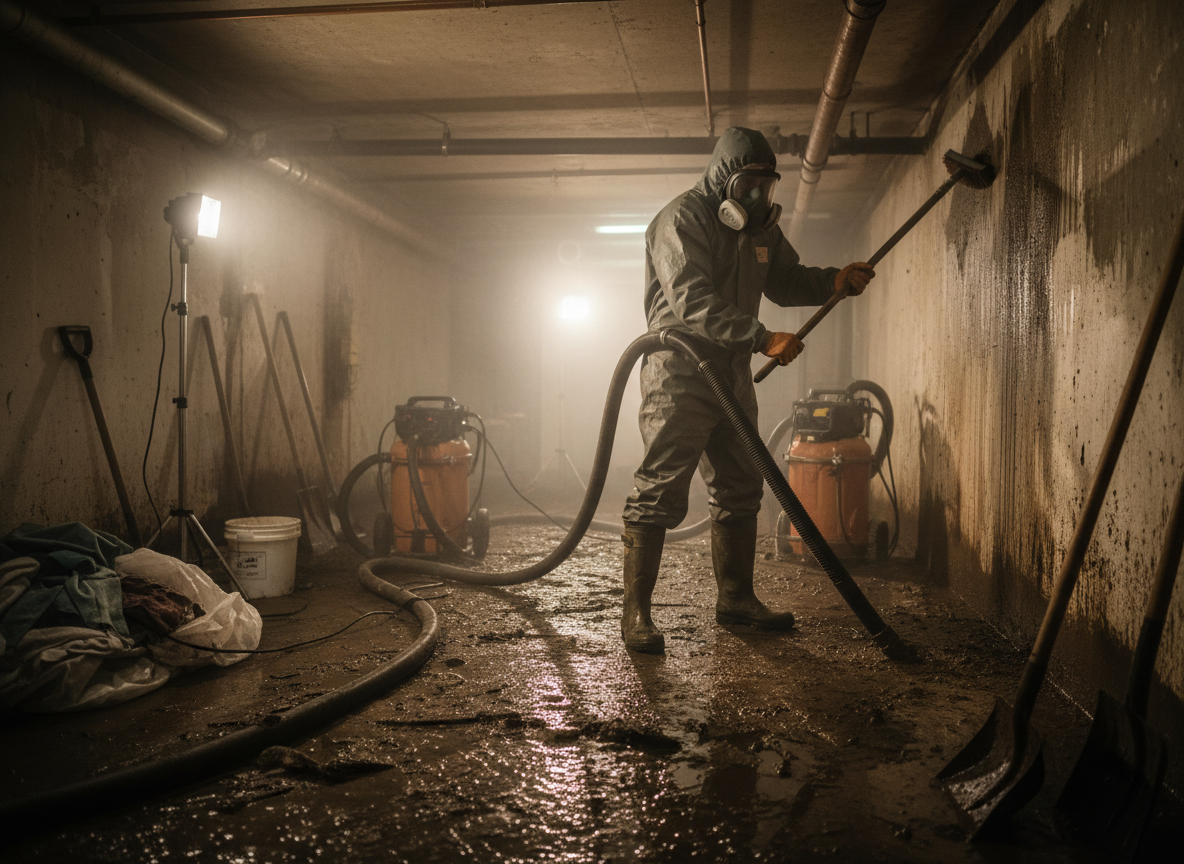
Sewage backups in Burton often stem from aging septic systems common on Vashon Island properties, where heavy winter rains saturate the ground and overwhelm drain fields. Crews must first isolate the affected zone, remove standing effluent, and apply EPA-registered disinfectants to porous materials like subflooring and drywall that absorb contaminants quickly. In older single-story homes along Vashon Hwy SW, moisture can migrate under cabinets and into wall cavities, requiring targeted demolition rather than surface cleaning alone to prevent hidden mold colonies.
King County health regulations require documented removal and disposal of all Category 3 water materials, so technicians track every load leaving the site. On sloped Burton lots, runoff can carry waste toward neighboring properties, making containment barriers essential before extraction begins. Homeowners frequently discover that carpet padding and particleboard vanities cannot be salvaged once saturated, while concrete slabs may need repeated antimicrobial treatments and moisture monitoring over several days.
Edge cases include sewage that reaches HVAC ducts or crawl spaces beneath 1960s-era homes, where limited access demands negative-air machines and full PPE protocols. After extraction, crews document moisture readings at multiple depths in framing and insulation to satisfy insurance adjusters and local inspectors before reconstruction starts.
Technician insight
In Burton, the thing that catches most people out with sewage cleanup is how quickly effluent travels under the slab in older Vashon Island homes with no vapor barrier; once it reaches the gravel base, you have to pull baseboards and sometimes sections of flooring on both sides of the wall or the odor returns the first time it rains hard.
Septic Backup After Heavy Rain
A Burton homeowner on a sloped lot near the highway noticed water rising in the laundry room after three days of rain. We found the septic drain field saturated and effluent migrating under the concrete slab into the kitchen. Extraction, targeted slab-edge demolition, and repeated antimicrobial applications cleared the contamination; the home passed clearance testing within five days.
How it works
- 1
Emergency Assessment
Arrive on site within hours, identify the source of the sewage intrusion, and map the full extent of contamination using moisture meters.
- 2
Containment and Removal
Set up physical barriers and negative air to protect unaffected areas, then extract all standing liquid and remove unsalvageable porous materials.
- 3
Cleaning and Disinfection
Apply professional-grade antimicrobials to all remaining surfaces, followed by HEPA vacuuming and multiple rinses to meet health department standards.
- 4
Drying and Verification
Deploy commercial drying equipment, monitor moisture levels daily, and confirm clearance with post-remediation testing before any rebuild work.
Pricing
Upfront quotes after on-site inspection; final cost depends on square footage affected, depth of contamination, and whether septic or municipal sewer lines are involved.