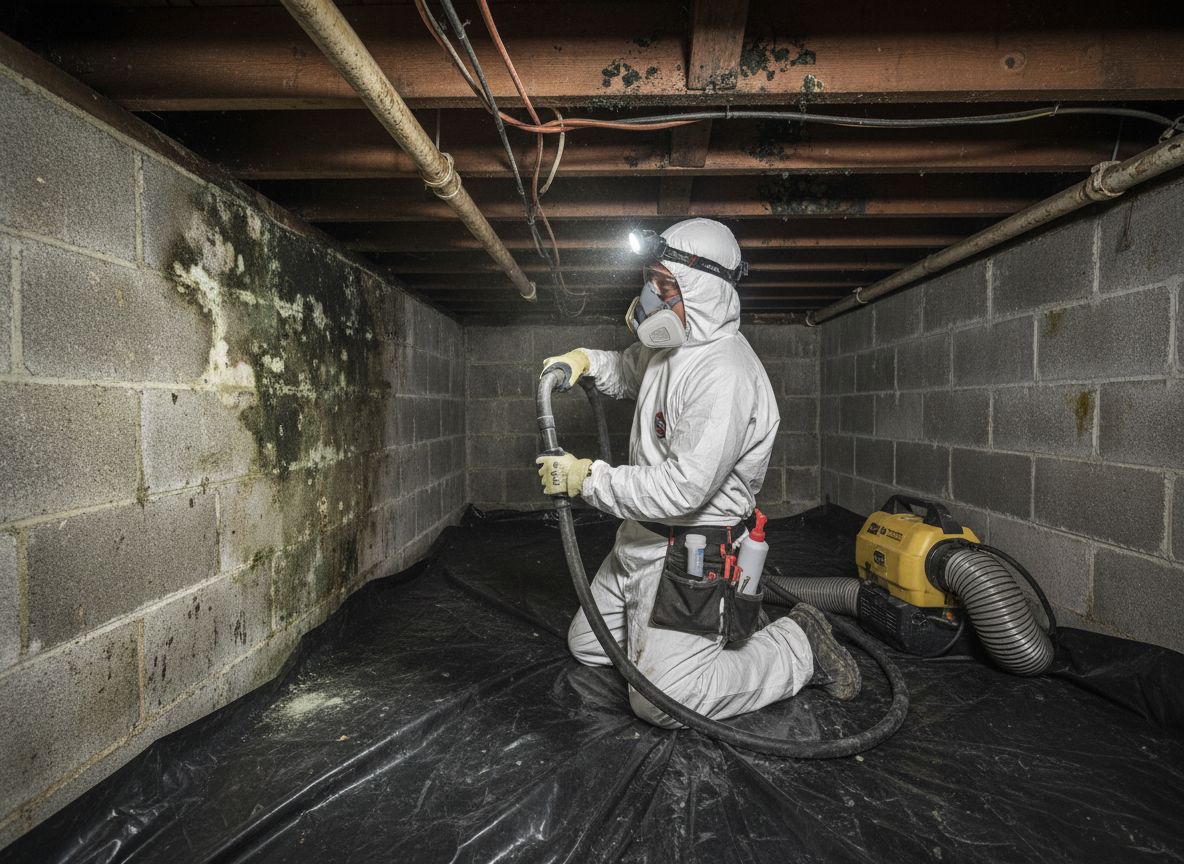
Burton sits on Vashon Island where winter rains often exceed 40 inches annually, driving groundwater up through crawl spaces in homes built from the 1940s through 1970s. These older structures typically lack modern vapor barriers and sit on clay-heavy soils that hold water against joists and insulation. Mold colonies form quickly once relative humidity stays above 60 percent for more than a few weeks, especially near plumbing penetrations and vent openings that draw in moist marine air.
Removal begins with isolating the space to prevent spores from reaching living areas above. Technicians use negative-air machines and sealed poly barriers before scraping visible growth and treating wood with EPA-registered antimicrobials safe for confined spaces. Hidden pockets behind insulation or along rim joists are common on the island; missing even one leads to rapid regrowth once humidity rises again. Post-treatment, dehumidifiers and directed airflow bring moisture content below 12 percent before any new insulation is installed.
Homeowners often overlook how Burton's sloped lots channel roof runoff directly toward foundations. French drains or exterior grading fixes are frequently needed alongside mold work to keep the crawl space dry long-term. Without addressing the water source, repeated treatments become necessary every two to three years. Access is also tighter in many Burton properties because of low clearance and irregular pier placements, requiring smaller equipment and more manual labor than mainland jobs.
After mold removal, crews install vapor-retarding liners and sealed crawl-space vents or conditioned-air systems suited to the island's mild but consistently wet climate. These steps cut future growth risk while meeting King County ventilation guidelines for habitable structures above. Regular inspections every six months catch early moisture spikes before they turn into visible colonies.
Technician insight
In Burton, the thing that catches most people out with crawl space mold removal is how the island's heavy winter rain and clay soils keep moisture trapped against older pier-and-beam foundations that lack any vapor barrier.
Winter Rain Triggered Mold on Vashon Island
A Burton homeowner noticed a musty smell after several weeks of rain. Inspection revealed mold along rim joists where roof runoff pooled against the foundation. We contained the space, removed growth, dried the wood, and added a sealed liner. The crawl space stayed dry through the following wet season.
How it works
- 1
Initial Assessment
Technicians enter the crawl space from the Burton address to map moisture sources, mold extent, and structural impact while documenting insulation condition and ventilation paths.
- 2
Containment Setup
Negative pressure is established with sealed barriers to keep spores from migrating into living spaces above the home.
- 3
Mold Removal and Treatment
Visible growth is removed, wood surfaces are cleaned and treated, and hidden areas behind insulation are addressed before drying begins.
- 4
Drying and Moisture Control
Industrial dehumidifiers and airflow equipment bring wood moisture content below 12 percent, followed by installation of a sealed vapor barrier.
- 5
Final Verification
Post-treatment readings confirm dryness; recommendations for exterior grading or drainage improvements are provided if runoff from Vashon Island slopes remains an issue.
Pricing
Pricing varies with the size of the crawl space, extent of hidden growth, and whether exterior drainage corrections are required.