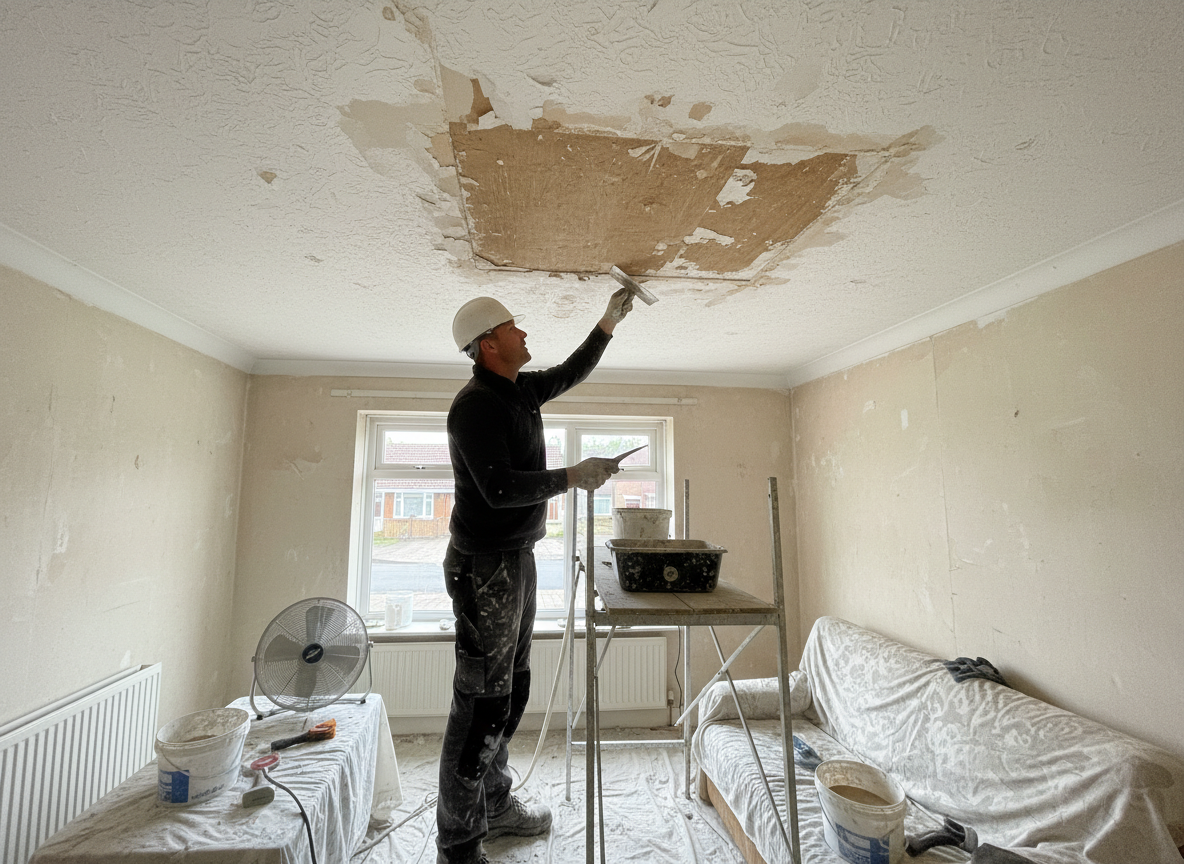
Ceiling water damage in Burton homes often starts from roof leaks or plumbing lines above, especially in older single-story houses common on Vashon Island. Moisture travels along joists and collects in drywall or plaster, creating sags that can fail suddenly once saturation reaches a critical point. Technicians must trace the path back to the source rather than simply patching visible spots, or the problem returns after the next heavy rain.
Drying ceilings requires lifting sections of drywall or using injection ports to reach cavities without full demolition. In Burton's damp marine air, any remaining moisture quickly supports mold growth on paper-faced drywall or insulation, so moisture meters and thermal imaging guide removal decisions. Access through attics is limited in many island homes with low-pitch roofs, forcing careful work from below to avoid spreading debris into living spaces.
After drying, repairs involve matching texture and paint while ensuring the ceiling structure regains its original load capacity. Edge cases include damage near light fixtures or HVAC registers where wiring and ductwork complicate removal. Homeowners should avoid walking on affected ceilings, as hidden saturation can cause sudden collapse onto furniture or occupants below.
Technician insight
In Burton, the thing that catches most people out with Ceiling water damage repair is how quickly moisture spreads along the underside of tongue-and-groove ceilings in older island homes; once it reaches the perimeter walls the job doubles in size and you end up opening far more surface than the original stain suggested.
Hidden Attic Leak on Vashon Highway
A Burton homeowner noticed a small brown spot after several days of rain. Inspection found a slow roof drip that had traveled along rafters and saturated insulation above the living room ceiling. We removed the wet section, dried the cavity, and replaced the drywall while the roof was patched, leaving the ceiling level and the home free of lingering moisture.
How it works
- 1
Source Identification
Inspect attic, roof plane and plumbing lines above the ceiling to locate the leak origin using moisture meters and visual tracing.
- 2
Containment and Extraction
Isolate the room, remove standing water if present, and set up air movers and dehumidifiers to pull moisture from drywall and insulation.
- 3
Ceiling Assessment and Removal
Cut out saturated sections, document hidden damage along joists, and dispose of affected materials to prevent mold regrowth.
- 4
Drying Verification and Repair
Confirm dryness with meters, install new drywall or plaster patches, match ceiling texture, and repaint to restore appearance and strength.
Pricing
Pricing varies with square footage affected, depth of hidden damage, and whether attic access is required.