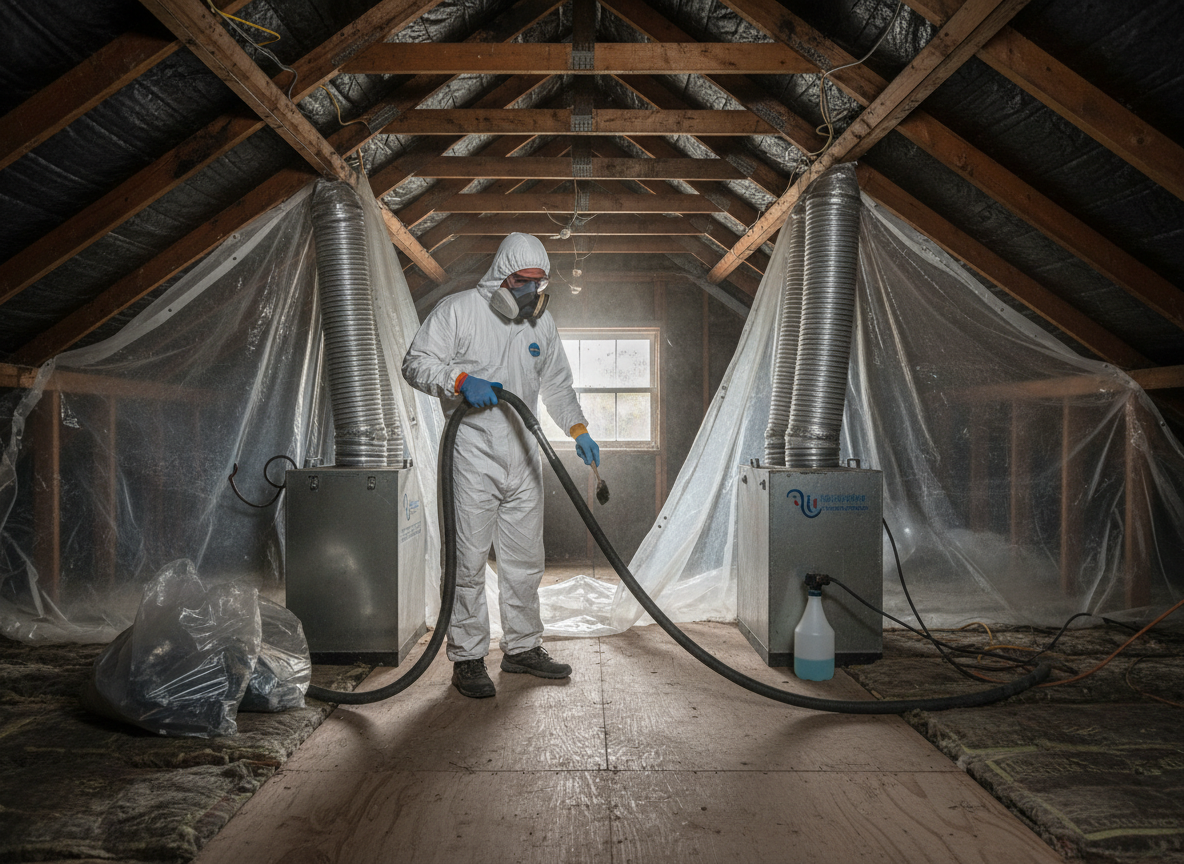
Attic mold remediation in Burton begins with locating the moisture source, often roof penetrations or ice dams that form during the area's frequent winter rains. Crews inspect insulation, rafters, and sheathing on Vashon Island homes, many built before 1980 with limited ventilation. Removing affected materials requires containment to prevent spores from drifting into living spaces below, followed by HEPA filtration and antimicrobial treatment on remaining wood surfaces.
King County building practices around Burton often leave attics with single-layer asphalt shingles over older cedar that trap moisture after heavy storms. Technicians check for hidden saturation in cellulose insulation and around plumbing vents or skylights. Proper drying uses air movers and dehumidifiers sized for the volume of space, with follow-up moisture readings to confirm levels stay below 12 percent before any new insulation is installed.
Seasonal Guidance
Heavy fall and winter rainfall on Vashon Island drives most attic mold calls in Burton. Homeowners should schedule inspections after wind-driven rain events, especially on homes with south-facing slopes where water pools at valleys and eaves.
Common Confusion Points
Attic mold is frequently mistaken for simple dust or staining until odors reach the second floor. Unlike basement mold, attic growth often stems from exterior leaks rather than indoor humidity, requiring roof repairs before any remediation holds.
Technician insight
In Burton, the thing that catches most people out with attic mold remediation is how quickly rain on Vashon Island soaks through older cedar shake roofs and sits in the insulation above the second-floor ceilings, turning a small leak into widespread growth before anyone notices.
Hidden Leak Above Burton Kitchen
Water from a cracked flashing had soaked cellulose insulation for months. We mapped the wet area, contained the attic, removed the saturated material, treated the rafters, and confirmed dryness with repeated readings before the homeowner's roofer sealed the source.
How it works
- 1
Inspection and Moisture Mapping
Technicians arrive with moisture meters and thermal cameras to trace water intrusion paths through the attic without disturbing insulation.
- 2
Containment Setup
Plastic barriers and negative air machines isolate the attic from the rest of the Burton home to stop spore migration during removal.
- 3
Removal and Cleaning
Affected insulation and porous materials are bagged and removed; wood surfaces are sanded or treated, then dried with targeted equipment.
- 4
Verification and Restoration
Post-remediation moisture checks and air sampling confirm the space is dry; new insulation is installed only after the roof leak is fixed.
Pricing
Upfront quotes after on-site inspection; final cost depends on square footage affected, insulation type, and roof access difficulty.